
Social Media Storytelling Malaysia: Why Your Ads Aren’t Working (And What To Do Instead)
Most Malaysian businesses are still running social media the old way.
Boost a post. Run an ad. Hope someone clicks. Repeat next month. It worked in 2017. It barely works now.
The average Malaysian spends close to three hours a day on social media, among the highest in Asia Pacific. But more time online hasn’t made people easier to reach. It’s made them better at ignoring you.
Scroll speed has increased. Attention spans have shortened. And the moment your content feels like an ad, people are already past it.
The businesses still growing organically on social media in Malaysia have figured something out: they stopped selling and started telling stories. This article breaks down what that actually means, why it works, and how to do it for your brand.
Why Ads Are Losing Their Stickiness in Malaysia
Here’s what changed.
When Facebook first opened up advertising to Malaysian businesses, the platform was relatively uncrowded. An ad stood out simply by existing. Targeting was new, reach was cheap, and consumers hadn’t yet learned to tune it out.
That era is over.
The Malaysian social media advertising market is projected to reach over USD 500 million in 2025, which means your ad is competing with thousands of others fighting for the same three hours of daily attention.
Malaysian consumers are spending more time online than ever, but how they interact with brands has fundamentally changed. Social platforms are no longer just for visibility, they are decision-making, community-building, and commerce environments.
Paid reach rents you attention for a moment. Storytelling earns it and keeps it.
The brands winning on Malaysian social media right now aren’t the ones with the biggest ad budgets. They’re the ones people actually want to follow.
What Social Media Storytelling Actually Means
Storytelling on social media isn’t about writing long captions or producing cinematic videos.
It’s about giving people a reason to care before you give them a reason to buy.
Most brands skip that first part entirely. They go straight to the product, the price, the promotion. And then they wonder why nobody engages unless there’s a discount.
A story, in its simplest form, has three things:
- A person (the founder, the customer, the employee)
- A problem they faced
- How it changed
That’s it. You don’t need a production studio. You don’t need a creative agency (but it helps if you want to focus on your business). You need something true, told clearly.
The brands in Malaysia doing this well have one thing in common, they make you feel something before they ask you to do something.
Why It Works Especially Well in Malaysia
Malaysia is a high-context culture. Relationships and trust matter before transactions do.
Content that acknowledges Malaysian cultural touchpoints, celebrates local festivals and references shared experiences consistently outperforms generic material. Malaysians don’t just buy products, they buy from people and brands they feel connected to.
This is why storytelling has an outsized advantage here compared to markets that are more transactional.
When someone reads your story and thinks “that sounds like me” or “I know someone like that,” you’ve done something no ad can replicate. You’ve created familiarity. And familiarity is the first step toward trust.
Three narrative styles consistently outperform in Malaysia: educational clarity, “let me explain, simply,” relatable lifestyle context e.g. “people like me use this” and social proof, “others have tried, and it worked.”
All three are story formats. None of them are ads.
How to Apply Storytelling to Your Brand on Social Media
Every business has something worth telling. Most just haven’t found the right angle yet.
The example below is a client that sells fertilisers. Instead of talking about the products, we identified stories in the business and turned them into content that people want to watch.
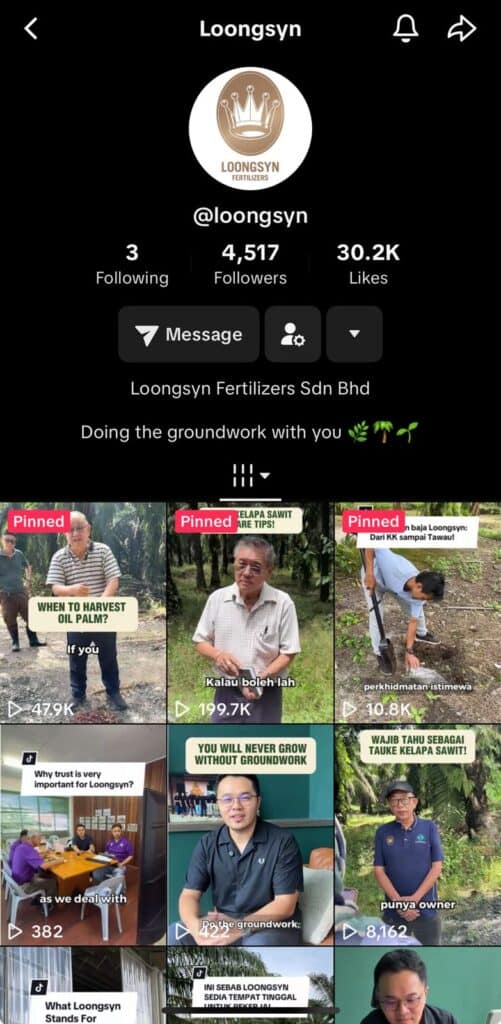
Here are the formats that work consistently on Malaysian social media right now.
- The Founder Story
Why did you start this business? Not the polished version… the real one. The moment of frustration, the problem nobody else was solving, the thing you couldn’t stop thinking about. Malaysian audiences respond strongly to founder stories because it answers the question they’re always asking: who is behind this, and can I trust them? - The Customer Transformation
Pick one customer whose life, business, or situation changed because of what you do. Tell their story specifically not “we’ve helped hundreds of clients” but this one person, this one problem, this one result. Specificity is what makes it believable. Generic claims are what makes people scroll past. - The Behind-the-Scenes
Malaysian users show strong engagement with authentic content that reflects genuine experiences. Show the process. Show the team. Show what it actually takes to deliver what you deliver.
Most brands are afraid to show behind the scenes because they think it reduces perceived value. The opposite is true. Transparency builds trust. - The Observation Post
You don’t always need to tell your own story. You can tell the story of something you noticed, a trend, a local brand, a moment in the industry and share your perspective on it. This positions you as someone who pays attention and thinks clearly. Over time, people come to you because of how you see things, not just what you sell.
The Biggest Mistake Malaysian Brands Make With Social Media Content
They separate their content from their identity.
They post motivational quotes, then product photos, then Hari Raya greetings, then a promo, then nothing for two weeks. The audience has no idea what this brand actually stands for or why they should pay attention.
A one-size-fits-all approach will fail. The 2026 content winners will be hyper-local, using specific Malaysian cultural nuances to pierce through the global noise.
Consistency in storytelling isn’t about posting every day. It’s about having a clear point of view that runs through everything you post. People follow accounts that have a perspective. They unfollow accounts that are just trying to sell.
Ask yourself: if someone read your last 10 posts, would they know what your brand believes in? What it stands against? What kind of person it’s built for?
If the answer is no, you don’t have a content strategy. You have a content calendar.
Where to Start
If you’re a Malaysian brand or entrepreneur reading this and you’re not sure where to begin, start here:
Write one true story this week.
Not about your product. About how you got here. Why you started. What you almost gave up on. What your first customer taught you.
Post it on LinkedIn or Instagram without a product mention. No call to action. Just the story. See what happens.
In my experience working with founders and businesses across Malaysia, the posts that perform best are almost never the ones designed to sell. They’re the ones that make someone stop and say: I didn’t know that. I felt that. I want to share that.
That’s the beginning of a social media presence that doesn’t need to be boosted to be seen.
Final Thought
In a fast-moving, content-saturated landscape, it’s the campaigns with heart, humour and creativity that rise above the noise.
Ads get you clicks. Stories get you trust. And in Malaysia (or perhaps in Asia), where buying is personal and relationships matter, trust is the only thing that compounds over time.
Your competitor can outspend you on ads. They can’t out-story you, if you’re willing to be honest about who you are and why you do what you do.
That’s the edge storytelling gives you. And it’s available to any Malaysian business willing to use it.
Richard Ker is a storyteller, entrepreneur, and founder of Richard Ker Digital, a creative agency helping businesses and individuals build influence through social media and brand storytelling. He has a combined following of over 480,000 across LinkedIn, X, Instagram, and TikTok and hosts the Never Been Told podcast featuring underdog founders across Southeast Asia. If you want to build a social media presence that actually grows your business, get in touch.







Leave a Reply